Chemistry Newsletter

2025–2026 Digital Newsletter
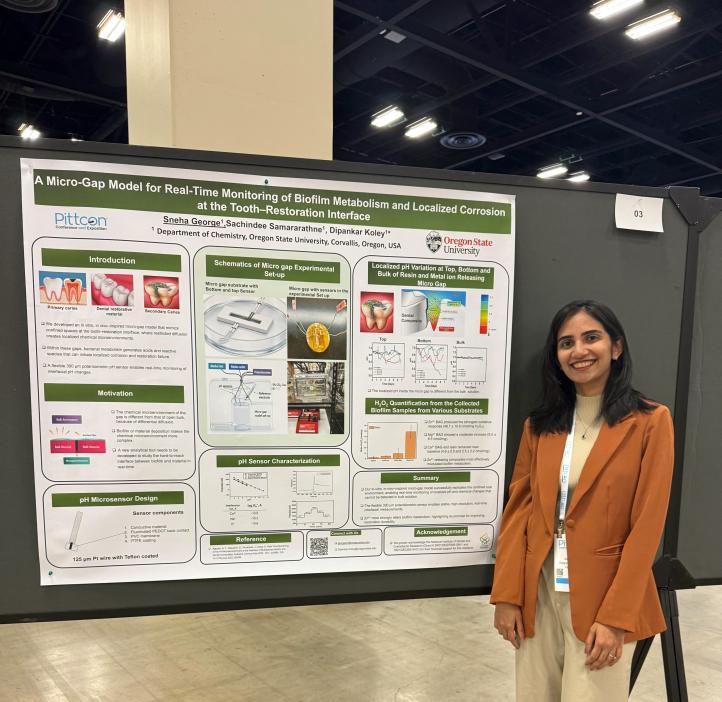
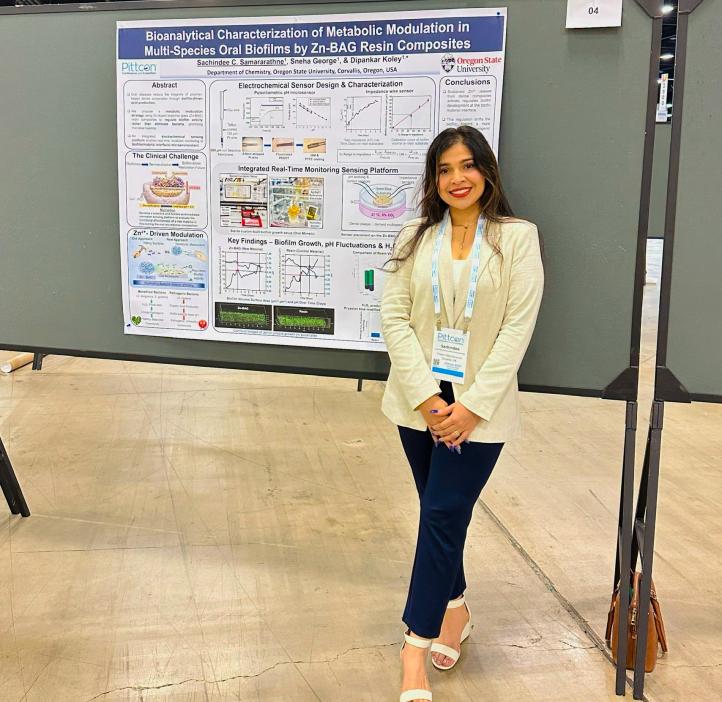
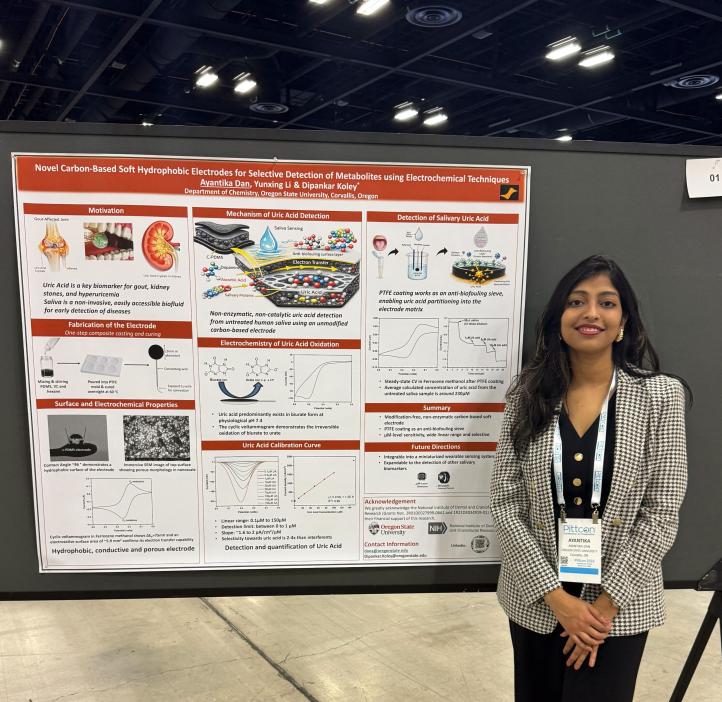
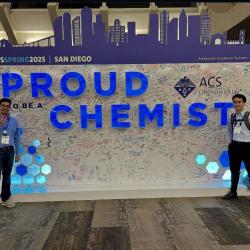
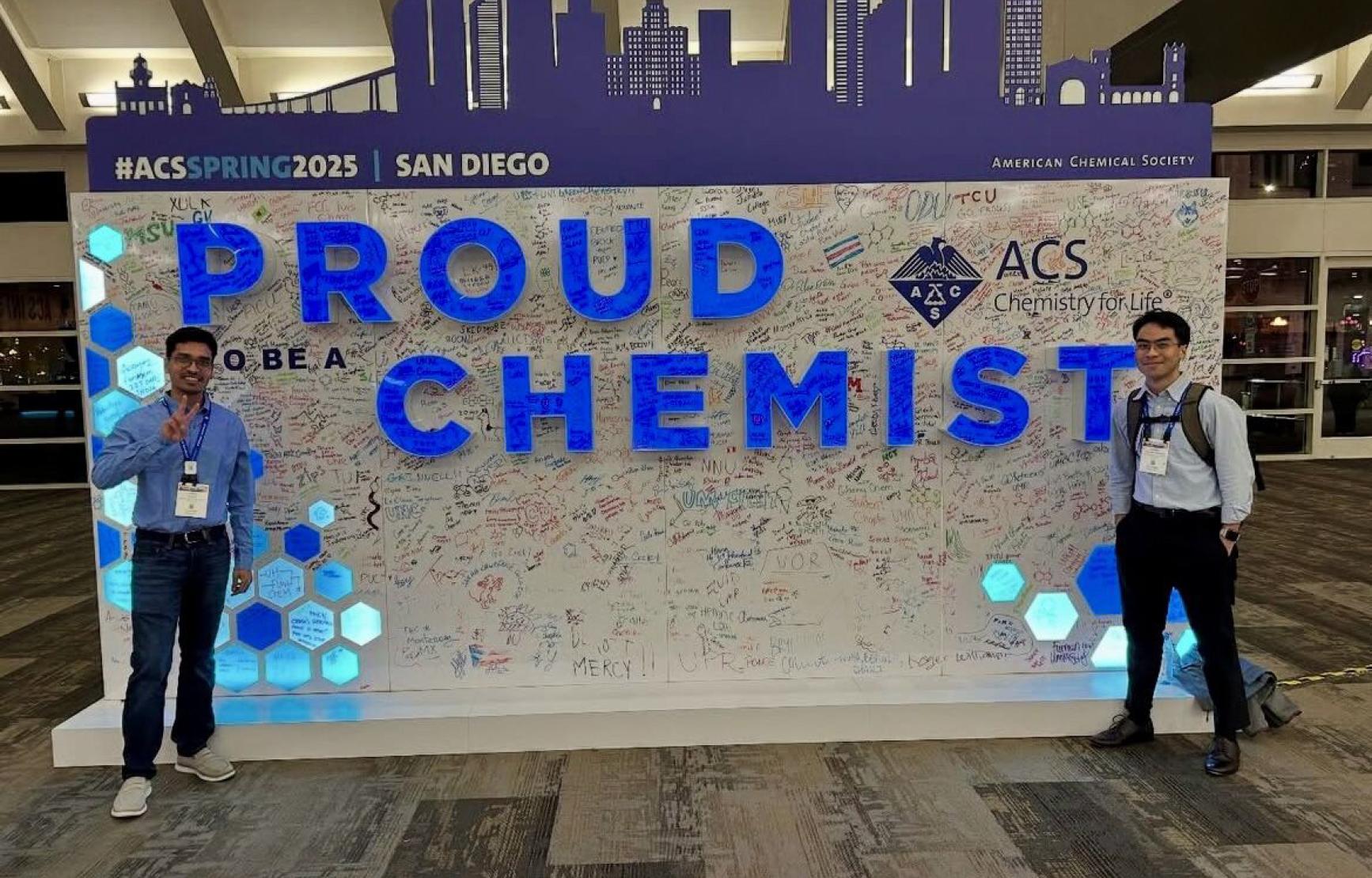
Two graduate student flank a large sign at the 2025 American Chemical Society conference that says "Proud to be a Chemist"

Two of the graduate students who shared their research at the 2025 American Chemical Society's national conference pose in the San Diego venue lobby.

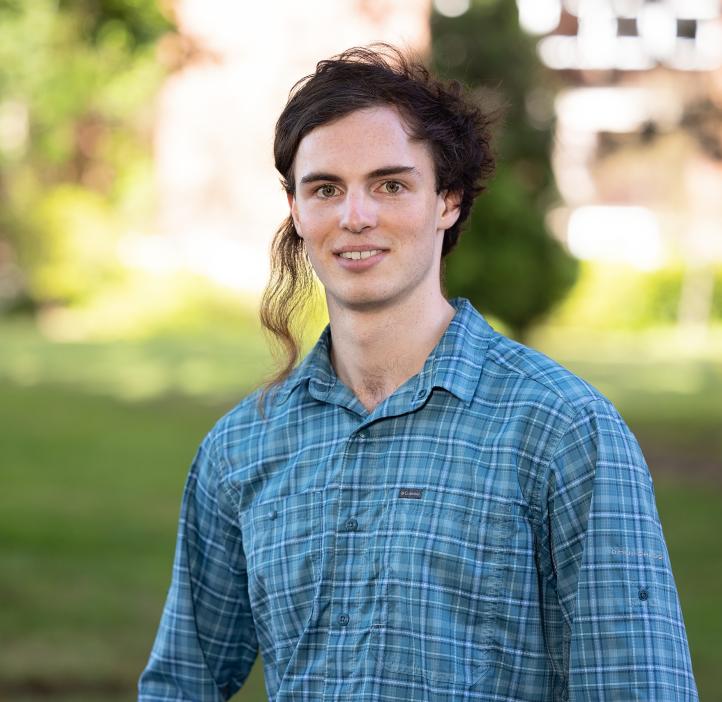
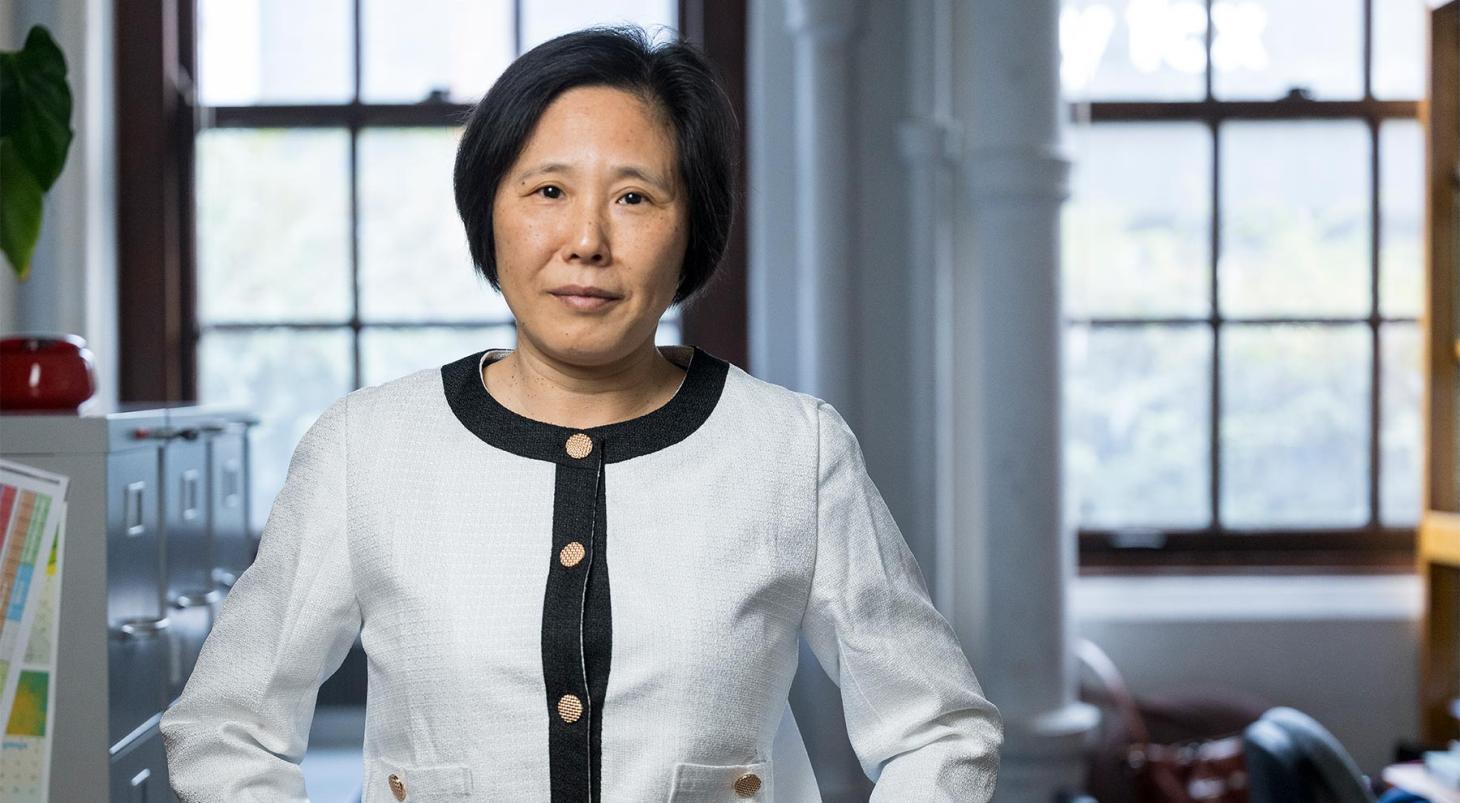
Headshot of Wei Kong in the lab in a dressy blazer

Dear alumni and friends,

The Newsletter is arriving a little later than usual due to staffing shortages, but as the saying goes, better late than never! Thank you for your patience. Please join me in welcoming Leah Brown, our new Marketing and Events Assistant, who has stepped into this role and will continue our tradition of excellence in supporting the department. Leah joins us from our neighboring state of Idaho and holds an M.A. in Science Writing from Johns Hopkins University. Welcome, Leah!

We also extend a warm welcome to Sophia Bailey, our newest hire in organic chemistry. Sophia comes to us from the Department of Materials Science & Engineering at Stanford University. Her research uses molecular-level design to explore fundamental questions about mechanical reactivity, establish structure-property relationships in polymeric materials, and address challenges in biomedicine. We are thrilled about Sophia’s arrival. For this successful recruitment, we owe a big thank-you to the search committee chaired by Paul Blakemore, with contributions from Addison Desnoyer, Alison Bain, Daniel Myles, BJ Philmus, and Elizabeth Wolfram (search advocate). Thanks to the support of our office staff — Luanne Johnson and Paula Christie — the entire process ran smoothly, and even the weather cooperated! Sophia has moved into the lab space previously occupied by Chris Beaudry, who has departed for Temple University.

Another warm welcome goes to Kyung-Shin Suh and Patrick Gordon, two new instructors joining our teaching team. With the rollout of the new Core Education Curriculum, the College of Engineering has requested an expansion of their General Chemistry sequence, from two to three lecture courses and from one to two lab courses. Rick Nafshun has taken the lead in designing this expanded sequence for both the on-campus and online modalities. To support the expected (and now confirmed) increase in enrollment, we recruited Kyung-Shin, who brings a computational chemistry background and extensive experience in the pharmaceutical industry. She is also leading the development of a new upper-level computational chemistry course, in addition to teaching the engineering labs and the trailer sequence online.

We were equally delighted to meet Patrick during the interview process; his passion for organic chemistry was immediately evident, and we knew we had to bring him on board to ease our urgent need for CH 337, the organic chemistry lab for non-majors. Patrick brings extensive experience teaching organic chemistry and has hit the ground running to increase our instructional capacity.

We also welcome two internal appointments: Michael Burand and Amila Liyanage, both promoted to Associate Professor of Teaching, with Amila also promoted to Senior Instructor II. Congratulations to both!

Across OSU, enrollment continues its upward trajectory. Even with our recent additions, we remain short by two full-time instructors, and nearly 20 sections this year are staffed by overloads or temporary instructors. We are currently in the process of hiring one or two more instructors to support our growing needs.

These increased teaching demands also require more support in our laboratories — specifically, the hiring of a new lab instructor and a new lab preparator. After all, chemicals do not simply appear on the bench — just ask Kristi Edwards, who can tell you all about her day in the basement of Gilbert Addition!

Congratulations are in order for our General Chemistry teaching team, recipients of the Student Learning & Success Teamwork Award. This award spans all three general chemistry tracks — CH 12x, CH 20x, and CH 23x/26x/27x — and recognizes the combined efforts of instructors across on-campus and online, lecture and lab. Our team includes Marita Barth, Michael Burand, Denis Drolet, Margie Haak, Jun Li, Amila Liyanage, Shrikant Londhe, Rick Nafshun, Artiom Skripka, Cassie Siler, John Terhorst, Paula Weiss, and Lou Wojcinski. You are the first faces our students encounter in chemistry, and your work plays a central role in student retention and success. Thank you for your dedication and service!

It has also been a whirlwind of good news for Alison Bain. In 2025, she received a new grant from McGill University, a single-PI award from the National Science Foundation, and recognition in the C&EN “Talented 12.” On February 27, 2026, she received the NSF CAREER Award. We are incredibly proud of you, Alison!

There are many additional awards I do not have space to list here, but you can read more about them in this Newsletter. These honors not only recognize the achievements of our colleagues but also reflect the tireless work of the nominators: Dipankar, Mas, Kyriakos, David, Rick, and Marita, effectively the entire executive committee. While teaching and research are the bread and butter of our work, service remains a core value of our department.

OSU Chemistry continues its remarkable upward trend in enrollment. After last year’s record of over 80 new majors, this year we exceeded 100. This is a strong testament to our collective teaching excellence. We are on track to teach 100,000 student credit hours and reach more than 27,000 students (across on-campus and online) this academic year.

After years of inquiries and planning, we finally have a new departmental golf cart! It will be used to transport chemicals between buildings and to shuttle people for teaching, research, and emergencies. The office and ChemStores have created a webform for reservations. (Please resist the temptation to take it for joyrides.)

Despite the challenges of the moment, our department continues to perform strongly, with several new NSF and NIH grants awarded in recent months and graduates securing excellent jobs. As we continue to navigate choppy waters, we remain grounded in our fundamentals: doing good science and serving our students well. I am often reminded of the Serenity Prayer by my mentor and friend, Glenn Evans, and it feels fitting to close with a modified version of it:

Accept the things we cannot change,
Change the things we can,
And know the difference.

Wei Kong
Department Head, Chemistry
Our best and brightest

Read on to welcome new faculty, celebrate promotions and learn how our hardworking faculty have spent the last year in research, teaching, travel and mentoring.

Image: Copper ions contribute to Aβ plaques in Alzheimer's Disease; read on to learn how the Mackiewicz Lab observes these processes in real time.

Researchers find way to watch, reverse chemical process linked with Alzheimer's disease

Marilyn Mackiewicz's lab used a molecule measuring technique to observe — and undo — chemical activity related to Alzheimer’s in a laboratory setting. They discovered how certain metals can promote the protein clumping that leads to the blocked neural pathways associated with Alzheimer’s.

A chemist's journey: Unlocking new battery chemistries for a sustainable future

Xiulei "David" Ji showcased his pioneering work uncovering new chemistry principles to develop safer, lower-cost, high-energy batteries. He also shared a personal journey: how he went from a small town in northeast China to Canada and then to leading breakthroughs on a global scale.

More research highlights

Welcome new hires!

Congratulations — well-deserved promotions

  • Amila Liyanage was promoted to Associate Professor of Teaching
  • Michael Burand was promoted to Associate Professor of Teaching

Faculty spotlights

Celebrating our students

Chemistry students are on the move! Read on about how our undergraduates and graduate students find success both inside and outside the classroom.

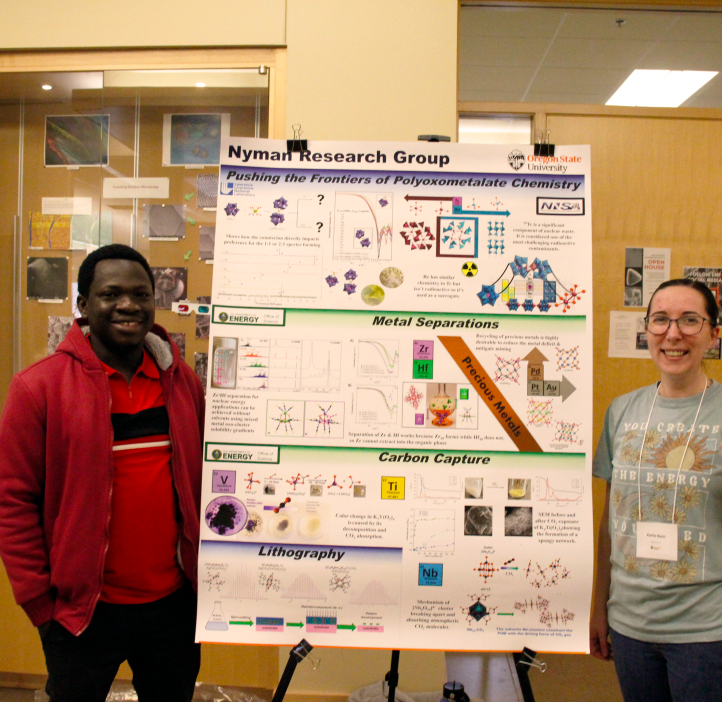
Image: Esteban “E” Hernandez with his poster presentation at Prospective Grad Open House

Student of the Quarter

Each quarter, the Department celebrates exemplary students whose academic and personal accomplishments inspire us all. Congratulations to these inspirational future chemists!

Grad students making us proud

Alum turns childhood curiosity into lifelong giving

A childhood spent tagging along on veterinary calls sparked Oregon State University alum Thomas Webb’s lifelong curiosity about how the world works. Decades later, that same curiosity now shapes his legacy by supporting the tools that help future chemistry students explore it for themselves.

More updates from our alumni

Our newest chemistry doctorates

The following graduate students have successfully defended their theses. Congratulations, Doctors!

  • Jenna Bustos: Metal-oxo Cluster Chemistry of Radioisotopes
  • Janak Dunn-Wall: Spectroscopic Tracking of Dynamic and Equilibrated Molecular Subpopulations of Aromatic Hydrocarbons
  • Jiawei Liu: Dissecting Excited-State Structural Dynamics of Flexible Chromophores in Solution Using Ultrafast Spectroscopy
  • Mackenzie Nord: Clusters as Building Blocks for Functional Materials
  • Alexander Rosenborough: Zirconium-Hafnium Speciation and Their Separation by Selective Precipitation
  • Erin Kalbaugh: Modular Fluorescent Sensing of Thiophenols: A Probe, an Extraction Technique, and a Portable Device
  • Yunxing Li: Electrochemical Sensors for Probing Interfacial Processes

Department highlights

As always, the Chemistry Department has had a busy year! Keep scrolling to see how we've balanced research travel, outreach efforts and new academic pursuits.

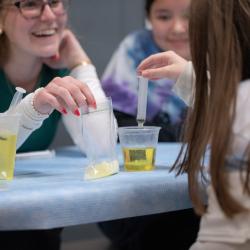
Image: Students at Waverly Elementary experience the joys of chemistry thanks to student volunteers

An OSU student smiles widely at the child in front of them. She holds a baggie of yellow liquid that the child is using a syringe to extract and place into a cup in front of her.
Family Science and Engineering Nights ignite STEM passion across Oregon schools

Since the early 2000s, Family Science and Engineering Nights have brought science and discovery to elementary schools across western Oregon. With bubbling beakers, cryogenic demonstrations and gooey gel beads, these interactive evenings make STEM come alive for countless families — thanks in large part to longtime co-organizer Margie Haak.

Two graduate student flank a large sign at the 2025 American Chemical Society conference that says "Proud to be a Chemist"
Conference access fuels career growth for Oregon State chemistry graduate students

For graduate students in chemistry at Oregon State University, conference season is more than a professional milestone — it’s a launchpad for future careers. Each year, students share discoveries and gain experience presenting their work, but conference travel is costly, and not all research groups can fund the experience. This Dam Proud Day, we're rallying to offset these costs to ensure no budding scientist is kept from this important milestone.

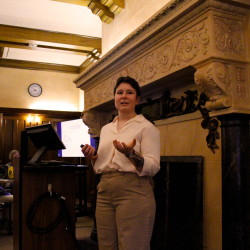
Sophia Bailey presenting her research.
Chemistry department faculty share ideas at Chemistry Research Expo

The event brought the department together and encouraged cross-campus collaboration.

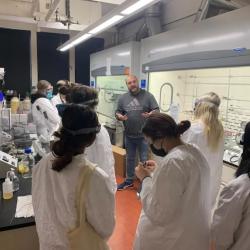
A group of students in lab coats stand around a professor in a laboratory.
Honors general chemistry series brings students into a community of innovation

The honors general chemistry sequence is one of the longest-running honors offerings at OSU, and the three-term series gives participating students access to advanced laboratory experiences, faculty mentorship and a learning community that often shapes their academic paths in their very first year.

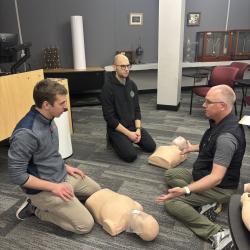
Three men sit on the floor with CPR dummies in a training session
Chemistry department gets life-saving training

The CPR training came from a collaboration between our department and Oregon State University Emergency Preparedness.

Contributions to experimental chemistry earn Joe Nibler Lifetime Achievement in Science Award

From being at the forefront of innovation in spectroscopy to inspiring the researchers of tomorrow, Nibler has made a lasting impact in science.

Congratulations to our Fall 2025 Honor Roll!

Raking in the honors

National Awards


University Awards


2025 College of Science Awards


Lab TA awards

These lab teaching assistants are nominated by their laboratory managers for doing exceptional work as teachers in the lab while also making progress toward their graduate degree.

Fall 2025: Vera Alenicheva (CH324), Sachindee Chandula (CH461), Yanzhao Fang (CH229), Zachary Ragan (CH204), Gage Rios (CH227), Karla Rodriguez (CH227)

Winter 2026: Hallee Boyd (CH 121), Prasanna Dasari (CH 337), Rudranil (Nil) Dutta (CH 324), Kelsi Ramos (CH 228Z), Ebuka Anizoba (CH 228z), Abigale Puccini (CH 228Z)


Integrated Lab Support Award

Nominated by course instructors, these undergraduate students go above and beyond in the laboratory course.

Fall 2025: Tanush Sistla (CH 361), Aaron Wiersman (CH 461)

Guess WHO (staff spotlight)

By Wei Kong

This is a story about a member of our department, and readers are invited to guess the name and role of this person. For the sake of anonymity, the writer will use the gender‑neutral pronouns “they,” “them,” and “theirs”, but rest assured, this is not a committee. It’s just one extraordinarily busy human.

This person is, in many ways, the mother hen of the department, minus the feathers, but with the same instinct to keep everyone fed, sheltered, and on schedule. They oversee all things personnel: payroll, work permits, and appointments for faculty, staff, and student workers. Many people come to them for information, including the head of the department, who has occasionally needed a reminder or two. The awards committee consults them about undergraduate scholarship criteria and the number of summer fellowships for graduate students. And when it comes to organization, they operate at an elite level: deadlines are tracked with precision, and reminders go out faithfully, sometimes more than three times for the exact same action. Consider it their version of positive reinforcement.

They are fiercely protective of their team and expect respect for all and from all. They have also earned numerous service awards from both the college and the university, which is what happens when someone quietly keeps an entire ecosystem running while the rest of us debate whether to use Helvetica or Calibri.

Of course, nobody is perfect. Their emails can be extremely concise, so concise that you might briefly wonder whether punctuation is charged by the character. Their tone can occasionally come off as a bit bossy, and they are not afraid to point out a mistake when it happens. (Sometimes even before you realize you made one.) There is simply no time for warm, fuzzy packaging when something needs to get done. But everyone agrees that their directness comes from caring about the department, and any occasional sharpness is usually just the inevitable by‑product of too much work and too little time.

In academia, the people who make scientific discoveries are often put on a pedestal — sometimes literally, if the lab has a spare stool. But equally important are the people who make sure the institution keeps functioning: the ones who answer the questions, file the paperwork, fix the problems, and only become visible when something stops working. The person in this story does not have a Ph.D. and cannot balance a chemical equation (to be fair, half our first‑years struggle with this before coffee), but they balance something far more complex: the entire operational heartbeat of this department. They work an ordinary job, raised two responsible kids, and navigate life with a strong sense of duty and a dose of anxiety that many of us can relate to. Outside of work, they enjoy crafts, home projects, and spending time with family.

They are, in short, a hero: not the lab‑coat‑wearing, reaction‑balancing kind, but the spreadsheet‑wielding, deadline‑enforcing, crisis‑preventing kind. A different kind of hero than academia usually celebrates … but one we absolutely could not function without.