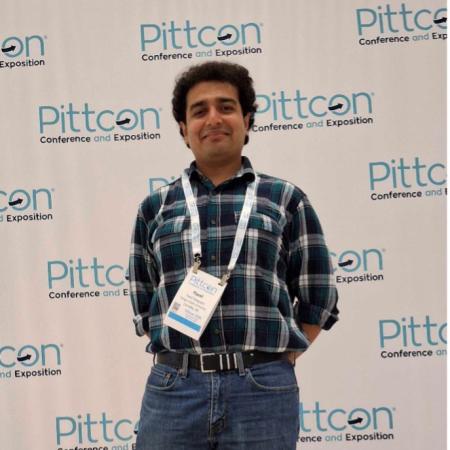
Oregon State University Department of Chemistry graduate student Sachindee Samararathne is laying the groundwork for smarter dental fillings. This work has earned her the Poster Award in the Society for Electroanalytical Chemistry (SEAC) session of Pittcon 2026, hosted earlier this year in San Antonio, Texas.
Instead of trying to destroy all bacteria indiscriminately, Sachindee and her team are developing materials that preserve beneficial bacteria and foster a healthy microbiome in the mouth. “We are investigating how incorporating [zinc ions] into dental filling materials can promote metabolic balance between pathogenic and healthy oral microbiomes rather than eliminate bacteria,” Sachindee says.
In order to achieve their goals, Sachindee’s team built a system that sensitively and accurately models the mouth and its microbiome as they grow in real time. She used flexible microsensors that could monitor the system’s pH and impedance, and introduced bacteria cultured from human volunteer samples.
At Pittcon, Sachindee and other OSU students working in the lab of Dipankar Koley presented their research to attendees from all over the world. “It was a great opportunity to discuss my work with researchers, receive feedback, and gain new perspectives on my approach,” she said. “These discussions helped bridge fundamental principles with real-life biological phenomena.”
Sachindee has returned to Corvallis with fresh ideas on how to proceed with her work, thanks to the conversations she had and the presentations she attended while at the conference.
“Overall, Pittcon 2026 was an incredibly enriching experience, especially as my first conference,” she said. “It provided a wonderful platform to connect with researchers from diverse backgrounds and exchange ideas that will help shape the next steps of my research.”