Oregon State’s 2025 Faculty Innovator Award celebrates Carter’s efforts to strengthen university innovation as his company, Valliscor, launches a major expansion in the Willamette Valley.
Oregon State University scientists have found a way to more than double the uptake ability of a chemical structure that can be used for scrubbing carbon dioxide from factory flues.
In the pursuit of large-scale, reliable, safe, environmentally sustainable and affordable electricity storage, chemist Xiulei “David” Ji is part of a collaborative, interdisciplinary team funded by the U.S. Department of Energy.
The American Chemical Society has announced that Mas Subramanian, a university distinguished professor of chemistry and Milton Harris chair of materials science, will receive the 2025 American Chemical Society National Award in Inorganic Chemistry.
Researchers from the College of Science, including graduate students, have developed a material that shows a remarkable ability to convert sunlight and water into clean energy.
Wei Kong enjoys taking the road less traveled, and she is not timid in making bold decisions to get oriented and reoriented. On May 13, 2024, she will present the 2024 F.A. Gilfillan Memorial Lecture, titled “Which way up: Using field orientation to see the unseen.”
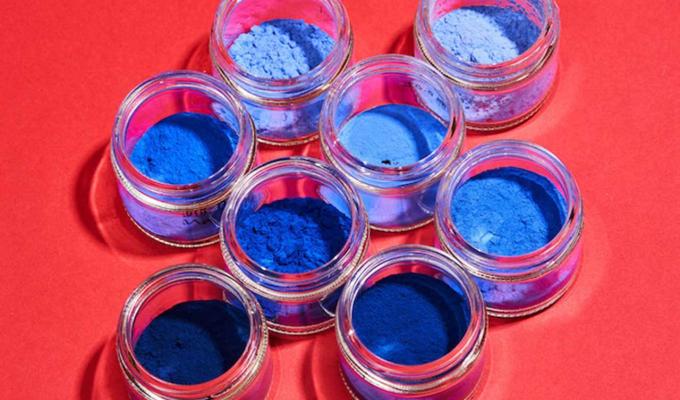
Mas Subramanian made color history in 2009 with a vivid blue pigment and has developed durable, reddish magentas inspired by lunar mineralogy and ancient Egyptian chemistry.
Scientists led by an Oregon State University chemistry researcher are closing in on a new tool for tackling the global problem of weedkiller-tainted groundwater.
Kyriakos Stylianou of the OSU College of Science led an international team that identified a material known as a metal-organic framework, or MOF, that showed an ability to completely remove, and also break down, the oft-used herbicide glyphosate.
One project keeps chemist Wei Kong awake at night, and it started as an idea nearly two decades ago. Now, after being awarded nearly $2 million for four years by the National Institutes of Health, the goal is to create a groundbreaking new tool with the potential to revolutionize drug development and enhance our understanding of disease mechanisms.
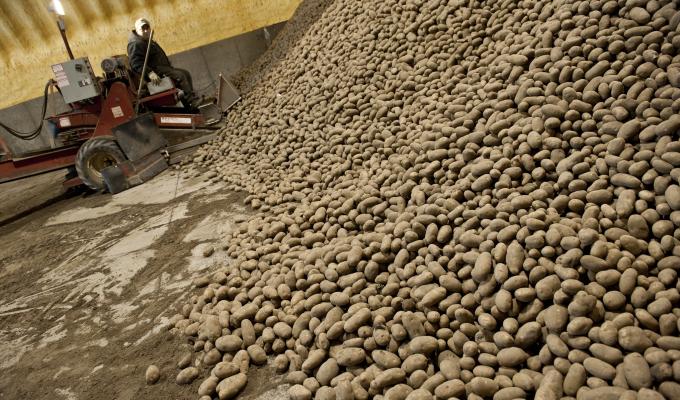
Oregon State University researchers have been awarded $2 million from the U.S. Department of Agriculture to develop improved ways of preventing stored potatoes from sprouting, particularly in the organic sector.
University Distinguished Professor Douglas Keszler is the recipient of the 2022 Lifetime Achievement in Science Award for his contributions to the field of a new generation of semiconductor and solar energy devices.
For many OSU materials scientists, fighting climate change means finding cleaner energy sources, developing sustainable alternatives to wasteful industry processes, and drawing on unconventional means to reduce the pollution already in the environment.
Seed funding from the College of Science Research and Innovation Seed (SciRIS) program continues to bolster ambitious and expansive research projects across biomedical science, fluid dynamics, quantum mechanics and more.
Path-breaking innovations from the College of Science at Oregon State University hold answers to critical problems in the environment, energy and healthcare.
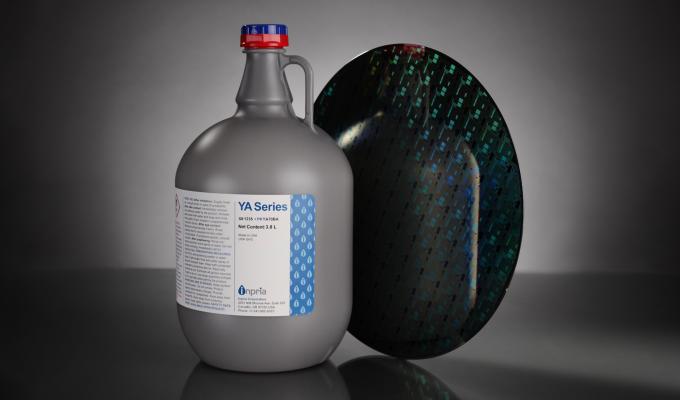
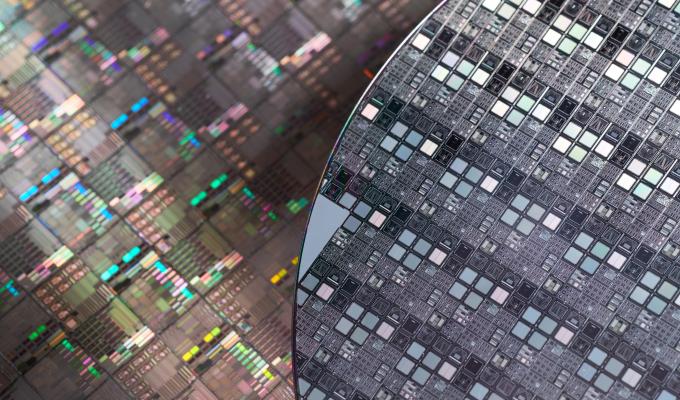
Inpria Corporation, which got its start at Oregon State and which has attracted investors such as Intel and Samsung with its revolutionary material used in microchips, has agreed to be acquired by Japanese firm JSR for $514 million.
College of Science Research and Innovation Seed (SciRIS) awards fund projects based on collaborative research within the College of Science community and beyond.
A pivotal Oregon State chemistry project – funded by a $493K grant from the M.J. Murdock Charitable Trust – will create a distinctive collaboration center for academic and industrial researchers that will bring synthetic chemistry into the digital age.
Culminating a project led by chemist Rich Carter, leaders from 67 universities and 13 national organizations have unanimously voted to approve a set of recommendations for recognizing innovation and entrepreneurial achievements among the criteria for higher education faculty promotion and tenure.
The Science Research and Innovation Seed awards were given to four multidisciplinary research teams working on cancer diagnostics and materials science.