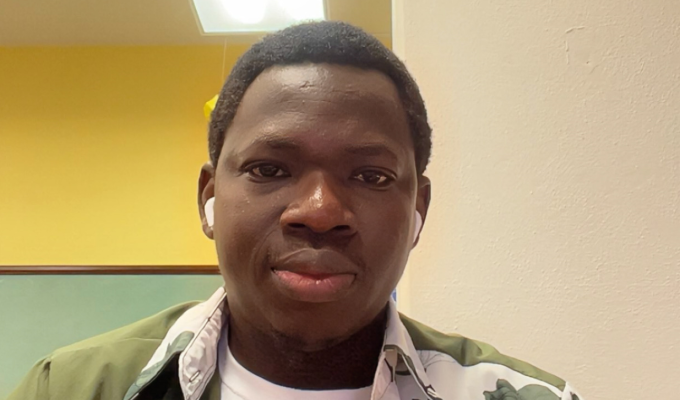
“Beyond being a scientist,” says Doctor Stephen, this term’s Graduate Student of the Quarter, “one of my interests is contributing to the society where I find myself.”
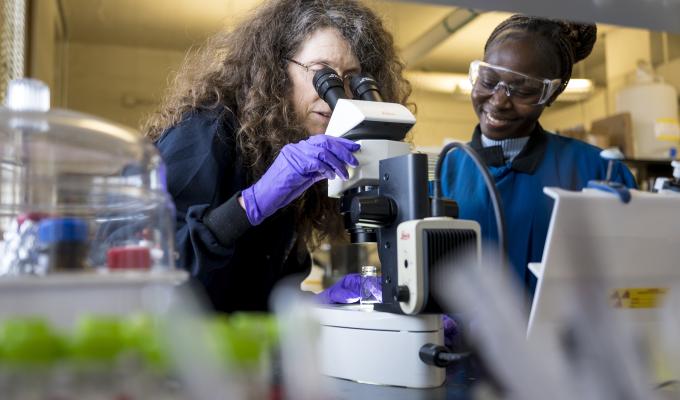
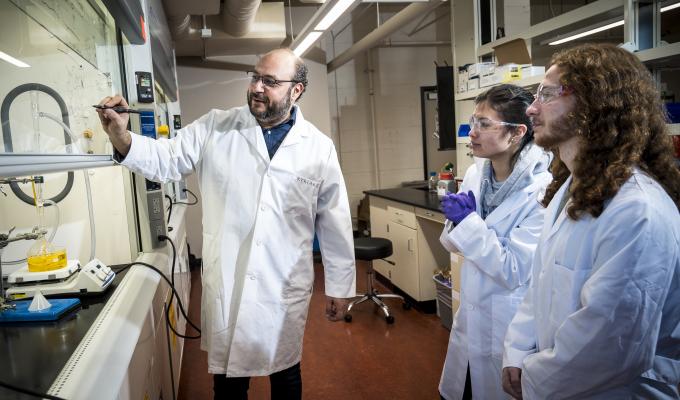
In the College of Science, materials scientist May Nyman and doctoral student Esther Julius are designing molecules that could help push the limits of traditional semiconductor manufacturing.
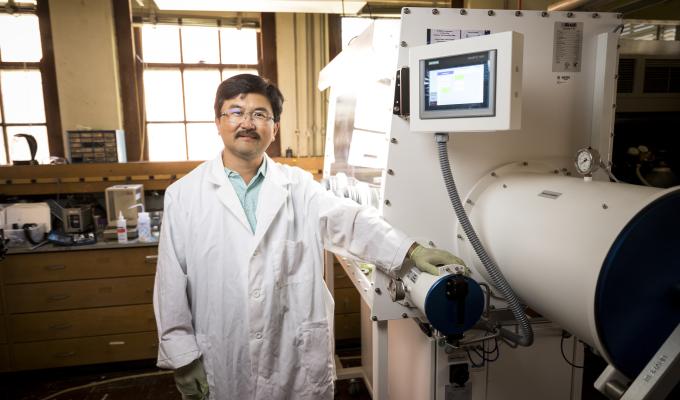
On Thursday, January 15, the lecture, “A chemist’s journey: Unlocking new battery chemistries for a sustainable future,” will showcase his pioneering work developing safer, lower-cost, high-energy batteries by uncovering new chemistry principles. He will also share how he went from a small town in northeast China to Canada and then leading breakthroughs on a global scale.
Four College of Science research teams have been awarded funding through SciRIS Stage 2 and Stage 3 categories. Their projects span quantum materials, nanotechnology, spectroscopy, and cell-based computing — exploring spin waves for future computing, tracking nanoplastics in living systems, developing single-pixel spectrometers, and advancing cell-based artificial intelligence.
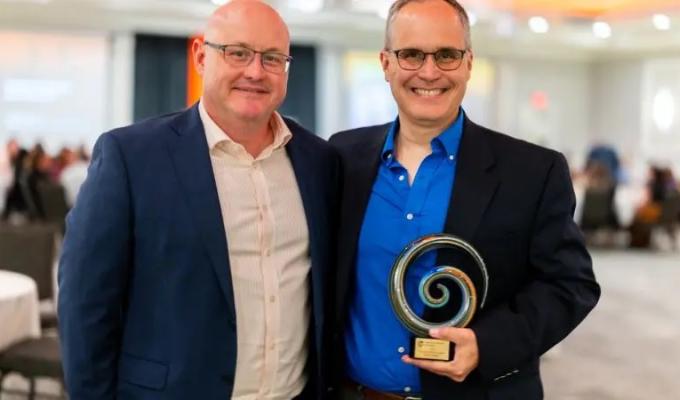
Oregon State’s 2025 Faculty Innovator Award celebrates Carter’s efforts to strengthen university innovation as his company, Valliscor, launches a major expansion in the Willamette Valley.
The work centers around crystalline, porous materials known as metal organic frameworks, often abbreviated as MOFs, and points toward next-generation materials that may end reliance on rare earth metals.
Marilyn Rampersad Mackiewicz, a materials scientist at Oregon State, led a study that used ultraviolet light to precisely control the shape and size of silver nanoparticles – and discovered a way to make them stable in light and oxygen, boosting their potential for medical, environmental and electronic applications.
In the pursuit of large-scale, reliable, safe, environmentally sustainable and affordable electricity storage, chemist Xiulei “David” Ji is part of a collaborative, interdisciplinary team funded by the U.S. Department of Energy.
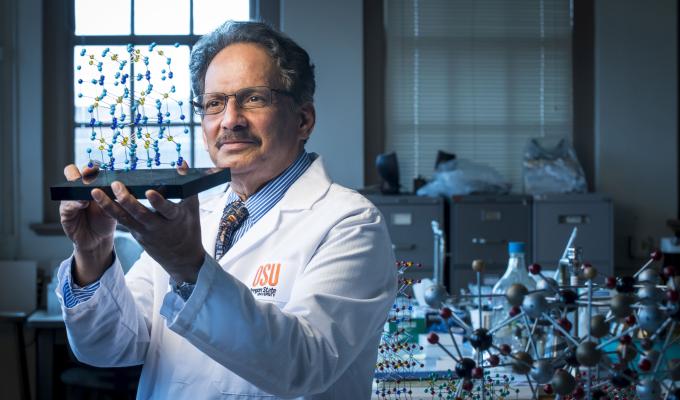
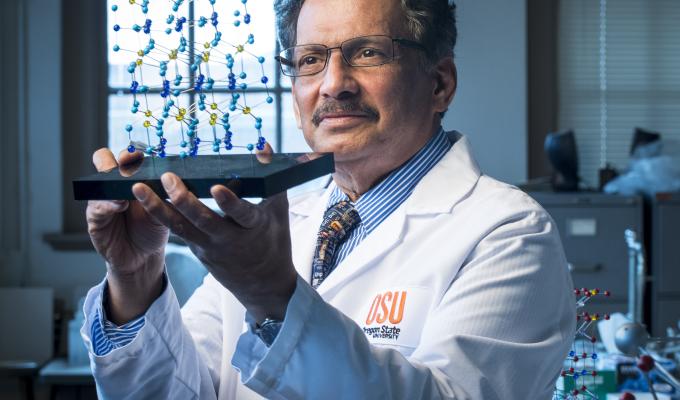
The American Chemical Society has announced that Mas Subramanian, a university distinguished professor of chemistry and Milton Harris chair of materials science, will receive the 2025 American Chemical Society National Award in Inorganic Chemistry.
Researchers from the College of Science, including graduate students, have developed a material that shows a remarkable ability to convert sunlight and water into clean energy.
A collaborative team co-led by a College of Science researcher have taken a key step toward closing the knowledge gap with a study that indicates silver nanoparticles’ shape and surface chemistry play key roles in how they affect aquatic ecosystems.
Wei Kong enjoys taking the road less traveled, and she is not timid in making bold decisions to get oriented and reoriented. On May 13, 2024, she will present the 2024 F.A. Gilfillan Memorial Lecture, titled “Which way up: Using field orientation to see the unseen.”
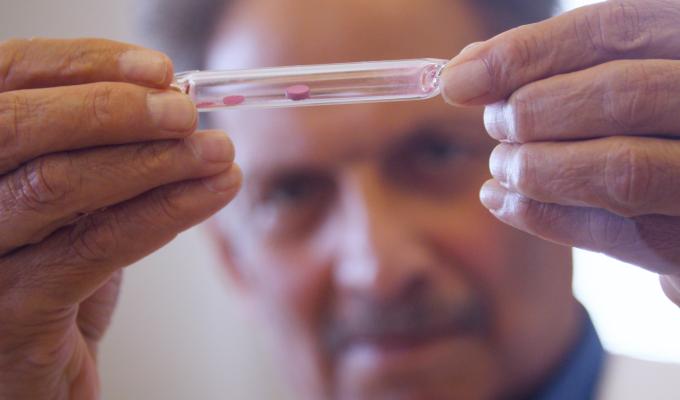
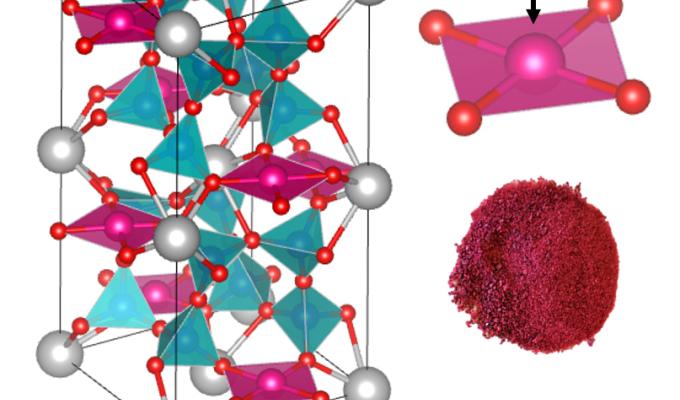
Mas Subramanian made color history in 2009 with a vivid blue pigment and has developed durable, reddish magentas inspired by lunar mineralogy and ancient Egyptian chemistry.
Oregon State University Distinguished Professor and Milton Harris Professor of Materials Science, Mas Subramanian, has been elected a fellow of the Neutron Scattering Society of America for “his insightful application of neutron scattering to provide far-reaching insights into materials chemistry.”
CORVALLIS, Oregon – An Oregon State University researcher who made color history in 2009 with a vivid blue pigment has developed durable, reddish magentas inspired by lunar mineralogy and ancient Egyptian chemistry.
Mas Subramanian, distinguished professor of chemistry, and collaborators at OSU report the findings of the study, funded by the National Science Foundation, in the journal Chemistry of Materials.
Scientists led by an Oregon State University chemistry researcher are closing in on a new tool for tackling the global problem of weedkiller-tainted groundwater.
Kyriakos Stylianou of the OSU College of Science led an international team that identified a material known as a metal-organic framework, or MOF, that showed an ability to completely remove, and also break down, the oft-used herbicide glyphosate.
In 2023, there were an estimated 1.5 million animal species on Earth– only one is truly blue.
The Obrina Olivewing butterfly is the only observed animal that internally produces a blue pigment; the scales of other blue butterflies are complex structures that only refract blue light.
But blue’s rarity is not limited to the organic world.
Congratulations to three Department of Chemistry faculty members awarded endowed positions, recognizing their exceptional contributions to solving major challenges in material science currently facing humankind. May Nyman is the Terrence Bradshaw Chemistry Professor; David Ji is the Bert and Emelyn Christensen Professor; and Chong Fang is the Patricia Valian Reser Endowed Faculty Scholar.
Shaping challenges into opportunities is what chemistry Ph.D. student Abdikani Omar Farah has done nearly all of his life. After growing up in East Africa and experiencing firsthand what it meant to lack access to medicine, Farah now wants to use his career to fill this drug scarcity and give back to his communities.
Researchers in the College of Science have demonstrated the potential of an inexpensive nanomaterial to scrub carbon dioxide from industrial emissions. The findings, published in Cell Reports Physical Science, are important because improved carbon capture methods are key to addressing climate change, said Oregon State's Kyriakos Stylianou, who led the study.
Scientists led by an Oregon State College of Science researcher have developed a new electrolyte that raises the efficiency of the zinc metal anode in zinc batteries to nearly 100%, a breakthrough on the way to an alternative to lithium-ion batteries for large-scale energy storage.