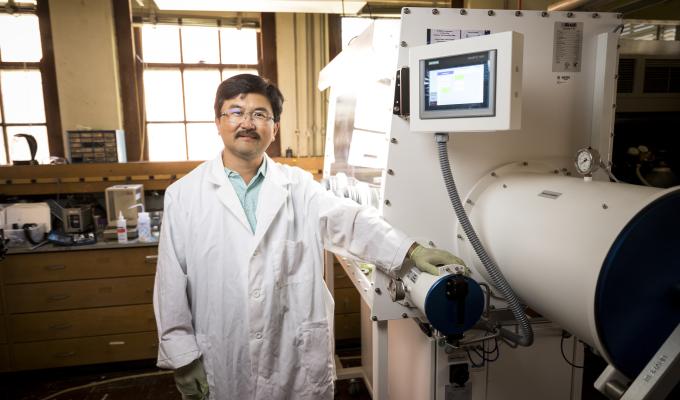
On Thursday, January 15, the lecture, “A chemist’s journey: Unlocking new battery chemistries for a sustainable future,” will showcase his pioneering work developing safer, lower-cost, high-energy batteries by uncovering new chemistry principles. He will also share how he went from a small town in northeast China to Canada and then leading breakthroughs on a global scale.
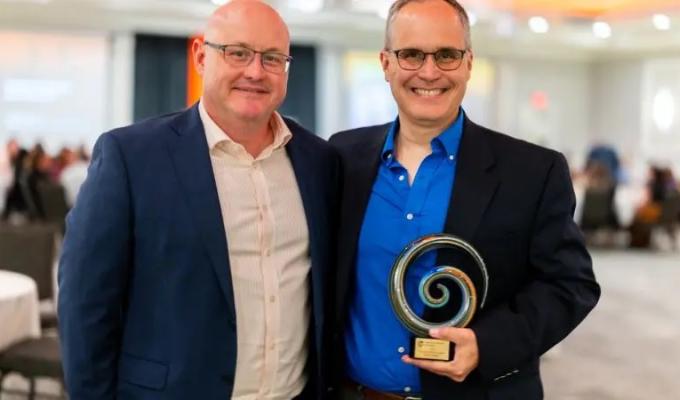
Oregon State’s 2025 Faculty Innovator Award celebrates Carter’s efforts to strengthen university innovation as his company, Valliscor, launches a major expansion in the Willamette Valley.
Meet a new member of the Department of Chemistry whose lab explores stimuli-responsive molecules for applications in drug delivery, tissue engineering and biomimicry.
Scientists in the College of Science have filed a patent on a design for a new magnetic resonance imaging contrast agent with the potential to outperform current agents while being less toxic to patients and more environmentally friendly.
The work centers around crystalline, porous materials known as metal organic frameworks, often abbreviated as MOFs, and points toward next-generation materials that may end reliance on rare earth metals.
A team of scientists led by chemist Chong Fang has discovered a new way to visualize and track chloride ions in living systems, opening the door to accelerated research on diseases like cystic fibrosis, epilepsy and certain cancers.
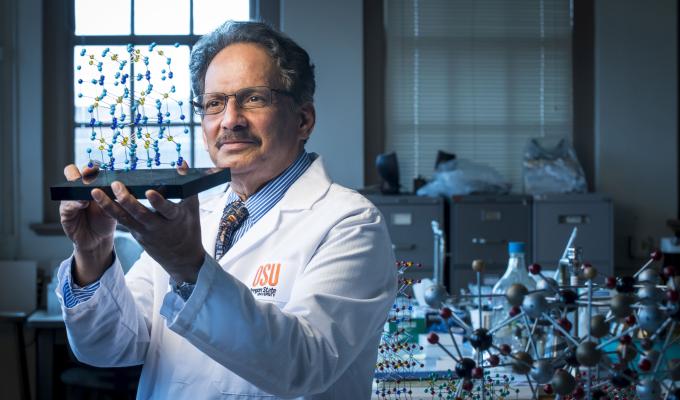
Mas Subramanian and his team found a way to transform an old Norwegian mineral and common metals into vivid pigments that resist fading and heat while offering new sustainable uses.
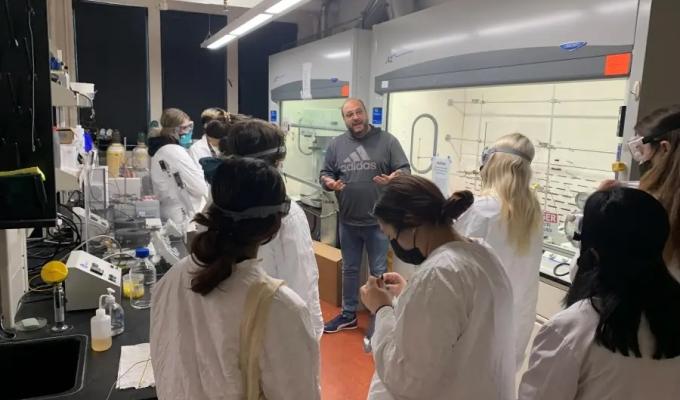
The College of Science is using research-backed pedagogy, interactive labs, and virtual kits to let students worldwide master science courses like chemistry, physics, and anatomy with the same rigor as in-person classes.
The College of Science is proud to announce that Alison Bain, assistant professor of chemistry, has been named one of the “Talented Twelve” by Chemical & Engineering News (C&EN), the newsmagazine of the American Chemical Society. The honor celebrates early-career researchers who are making the world a better place through chemistry.
Since the early 2000s, Family Science and Engineering Nights have brought science and discovery to elementary schools across western Oregon. With bubbling beakers, cryogenic demonstrations and gooey gel beads, these interactive evenings make STEM come alive for countless families — thanks in large part to longtime co-organizer Margie Haak.
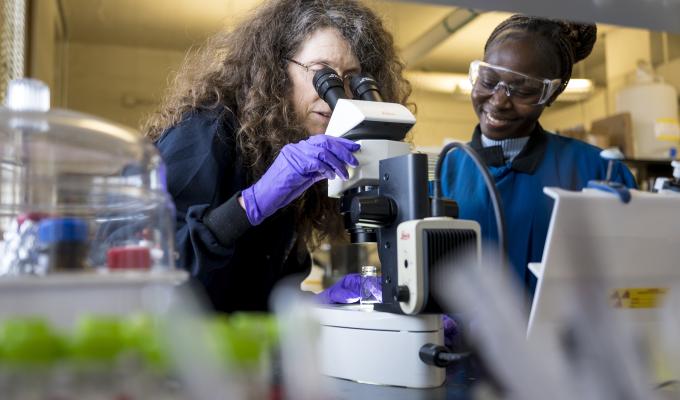
Marilyn Rampersad Mackiewicz, a materials scientist at Oregon State, led a study that used ultraviolet light to precisely control the shape and size of silver nanoparticles – and discovered a way to make them stable in light and oxygen, boosting their potential for medical, environmental and electronic applications.
Light is more than just illumination – it’s the energy that makes life possible. Physical chemist Tim Zuehlsdorff is using his coveted National Science Foundation Faculty Early Career Development (CAREER) award to study what happens when molecules interact with light in dynamic environments, such as solvents or proteins.