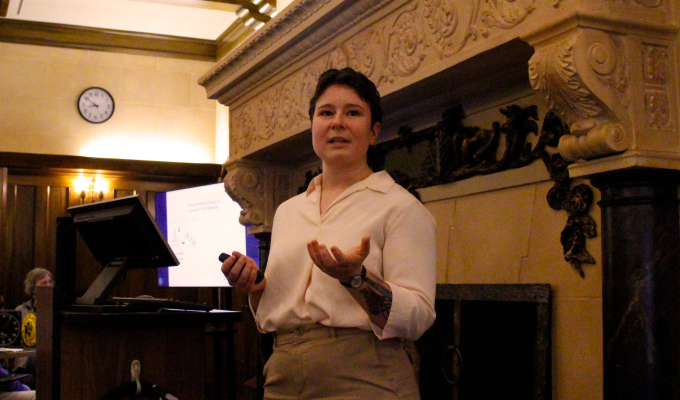
McKenna Crise graduated from Oregon State in winter term with a degree in biochemistry and molecular biology and a minor in chemistry. She is now beginning her career at CCRM Fertility in Denver, where she hopes to make the world of genetics less intimidating and more approachable for patients and families.
In the 2025-2026 academic year, graduate students in the College of Science received notable recognition through a variety of competitive fellowships, scholarships and professional development awards. These honors support students at critical stages of their graduate education, helping fund research, conference travel, tuition and other opportunities that contribute to academic and professional growth.
Juliana Betancourt has been using chemistry to dive into the secrets of nanoplastics, taking part in crucial research well before she finishes her undergraduate studies.
A childhood spent tagging along on veterinary calls sparked Oregon State University alum Thomas Webb’s lifelong curiosity about how the world works. Decades later, that same curiosity now shapes his legacy by supporting the tools that help future chemistry students explore it for themselves.
Sensat was awarded for his work developing new chemistries for adaptable polymer networks; providing materials for industrial and biomedical applications.
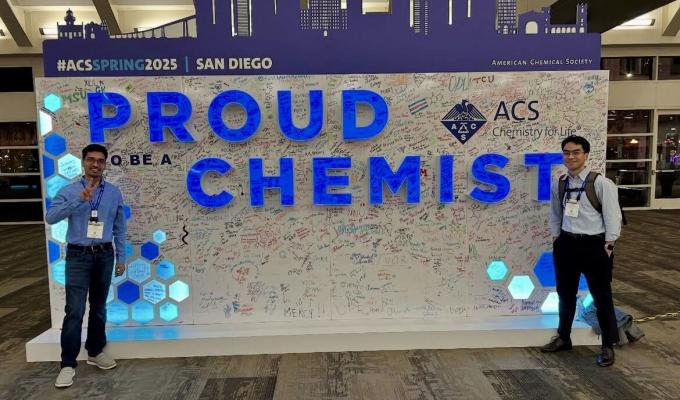
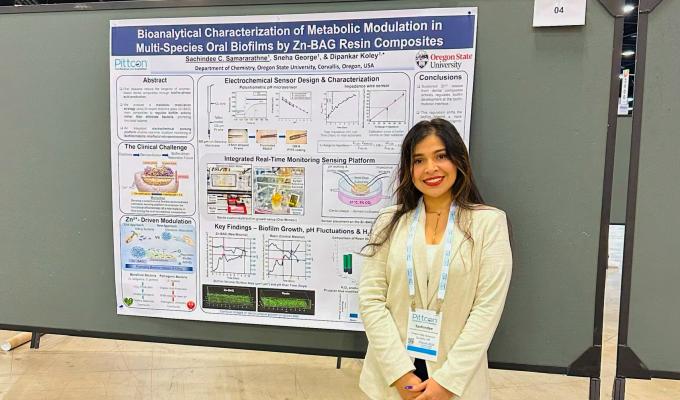
For graduate students in chemistry at Oregon State University, conference season is more than a professional milestone — it’s a launchpad for future careers. Each year, students share discoveries and gain experience presenting their work, but conference travel is costly, and not all research groups can fund the experience. This Dam Proud Day, we're rallying to offset these costs to ensure no budding scientist is kept from this important milestone.
The College of Science and Department of Biochemistry and Biophysics at Oregon State University have received a $450K award from the M.J. Murdock Charitable Trust to establish the Partners in Science program on the Corvallis campus.
The novel sensor, which also has potential applications in health care and environmental monitoring, is based on the design principle of engineered interfacial chemistry. Funded by the National Science Foundation, the study by scientists at Oregon State and researchers in Taiwan was published in Applied Nano Materials, a journal of the American Chemical Society.
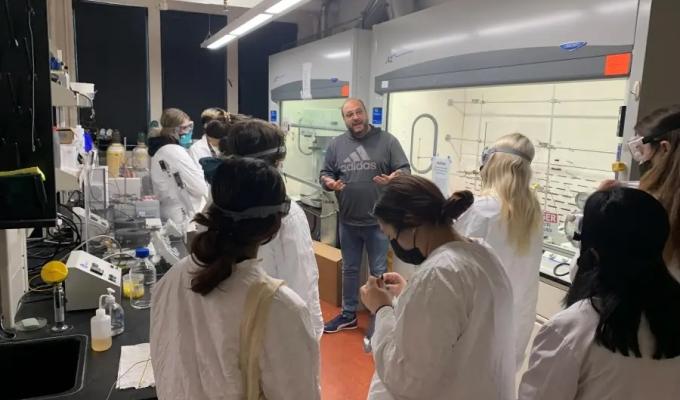
The honors general chemistry sequence is one of the longest-running honors offerings at OSU, and the three-term series gives participating students access to advanced laboratory experiences, faculty mentorship and a learning community that often shapes their academic paths in their very first year.
“Beyond being a scientist,” says Doctor Stephen, this term’s Graduate Student of the Quarter, “one of my interests is contributing to the society where I find myself.”
Over a handful of years, Audrey Garrison has gone from a high school student with an interest in chemistry to a scientist taking on the pollutants in our water and soil.
One day, in chemistry class at Hermiston High School, Trey Stephens-Cherry watched as his teacher let a piece of sodium plummet into a bucket full of water. The resulting explosion kickstarted a passion for chemistry that propelled him into the chemistry major at Oregon State University.
In the College of Science, materials scientist May Nyman and doctoral student Esther Julius are designing molecules that could help push the limits of traditional semiconductor manufacturing.