Oregon State University materials scientist Marilyn Rampersad Mackiewicz studies silver nanoparticles in a lab
Chemistry

Using light to tune silver nanoparticles opens door to better imaging and much more

Marilyn Rampersad Mackiewicz, a materials scientist at Oregon State, led a study that used ultraviolet light to precisely control the shape and size of silver nanoparticles – and discovered a way to make them stable in light and oxygen, boosting their potential for medical, environmental and electronic applications.

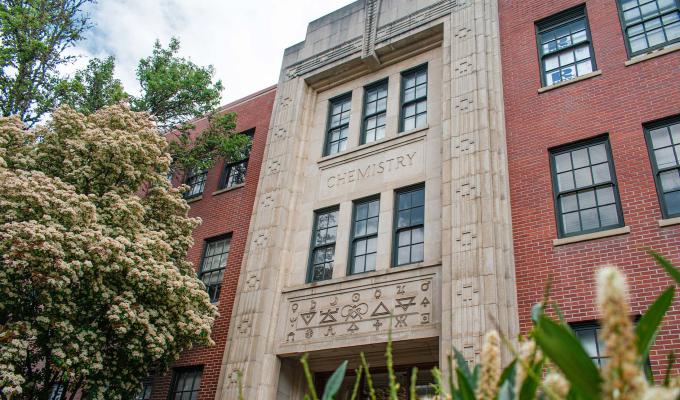
A view of the front of Gilbert Hall.
News

New nanocrystals a key step toward more efficient optical computing and memory

Scientists including an Oregon State University chemistry researcher have taken a key step toward next-generation optical computing and memory with the discovery of luminescent nanocrystals that can be quickly toggled from light to dark and back again.

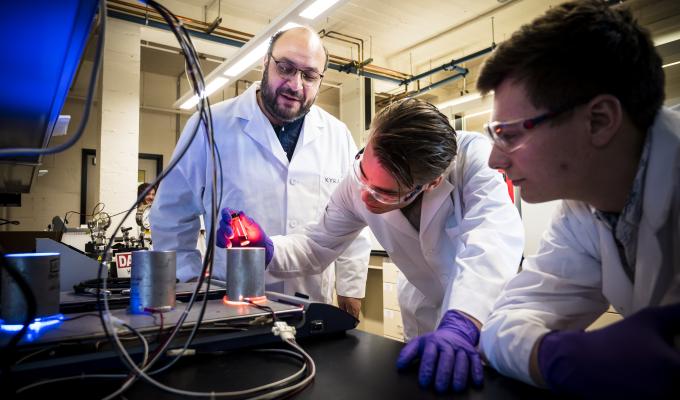
May Nyman and students checking out equipment in lab
Chemistry

New chemical structures developed by OSU chemist show vastly improved carbon capture ability

College of Science researchers have synthesized new molecules able to quickly capture significant amounts of carbon dioxide from the air, an important tactic in climate change mitigation.

Under a cloudy sky, snow covers the ground of a small factory exterior as the building emits a long plume of smoke.
Research

Chemical structure’s carbon capture ability doubled by COS-led research

Oregon State University scientists have found a way to more than double the uptake ability of a chemical structure that can be used for scrubbing carbon dioxide from factory flues.

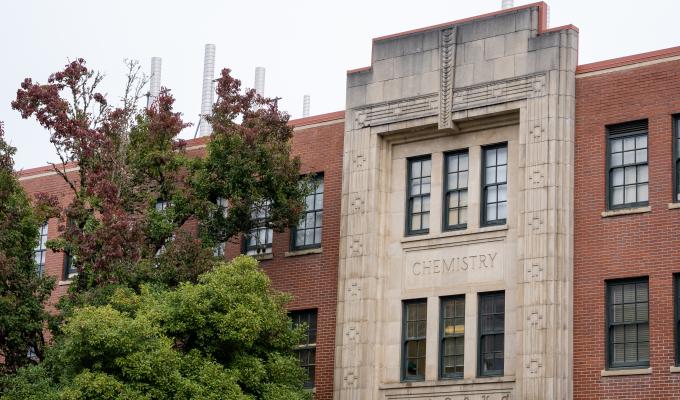
Gilbert Hall on Oregon State University Corvallis. A brick building with "Chemistry" on the front.
Chemistry

Chemist uncovers better way to produce green hydrogen

Researchers from the College of Science, including graduate students, have developed a material that shows a remarkable ability to convert sunlight and water into clean energy.

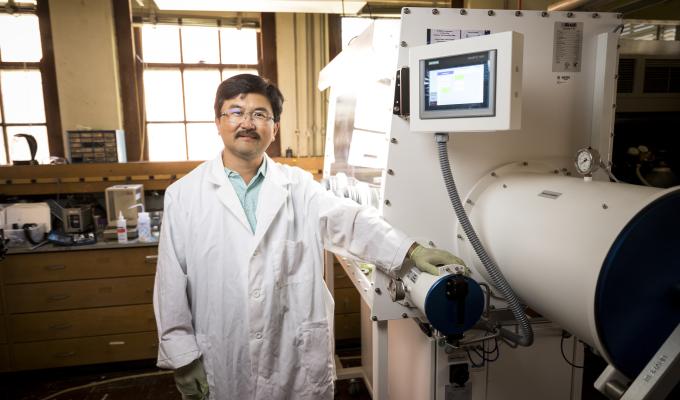
A man in a lab coat stands in front of a white machine used for battery science.
Chemistry

Iron could be key to less expensive, greener lithium-ion batteries, research finds

What if a common element rather than scarce, expensive ones was a key component in electric car batteries?

Graphic of a Crystal Structure
OSU Press Releases

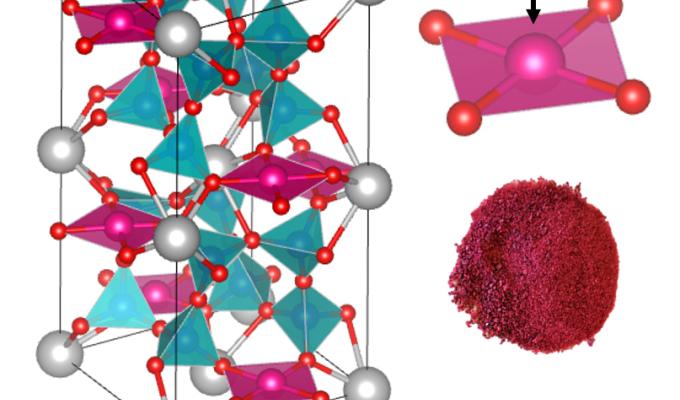
Oregon State researchers advance pigment chemistry with moon-inspired reddish magentas

CORVALLIS, Oregon – An Oregon State University researcher who made color history in 2009 with a vivid blue pigment has developed durable, reddish magentas inspired by lunar mineralogy and ancient Egyptian chemistry.

Mas Subramanian, distinguished professor of chemistry, and collaborators at OSU report the findings of the study, funded by the National Science Foundation, in the journal Chemistry of Materials.

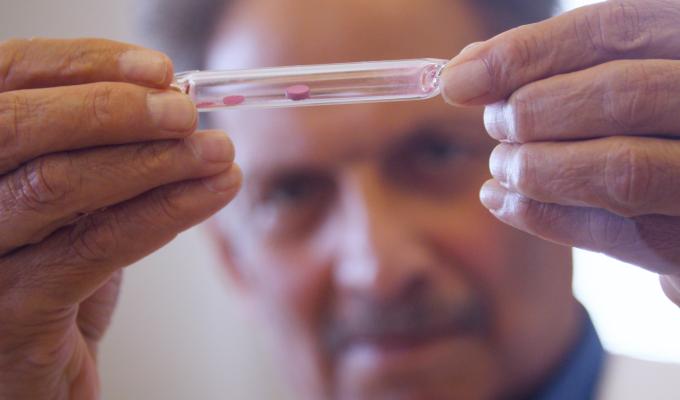
A man in a lab coat holds a vial with a red pigment.
Faculty and Staff

Mas Subramanian advances pigment chemistry with moon-inspired reddish magentas

Mas Subramanian made color history in 2009 with a vivid blue pigment and has developed durable, reddish magentas inspired by lunar mineralogy and ancient Egyptian chemistry.

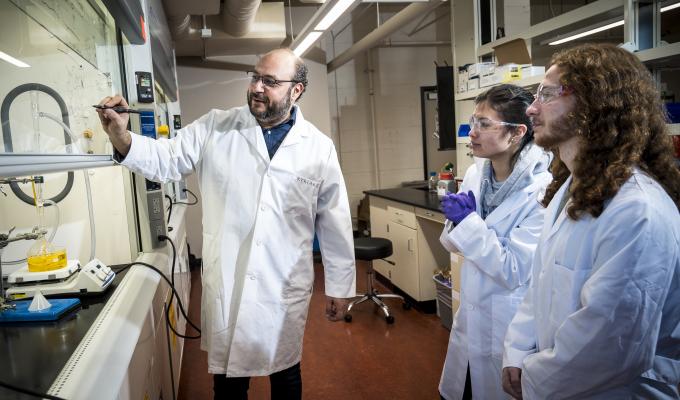
Three people in lab coats write on a clear board inside of a laboratory.
Chemistry

Researchers make key advance toward removing pesticide from groundwater

Scientists led by an Oregon State University chemistry researcher are closing in on a new tool for tackling the global problem of weedkiller-tainted groundwater.

Kyriakos Stylianou of the OSU College of Science led an international team that identified a material known as a metal-organic framework, or MOF, that showed an ability to completely remove, and also break down, the oft-used herbicide glyphosate.

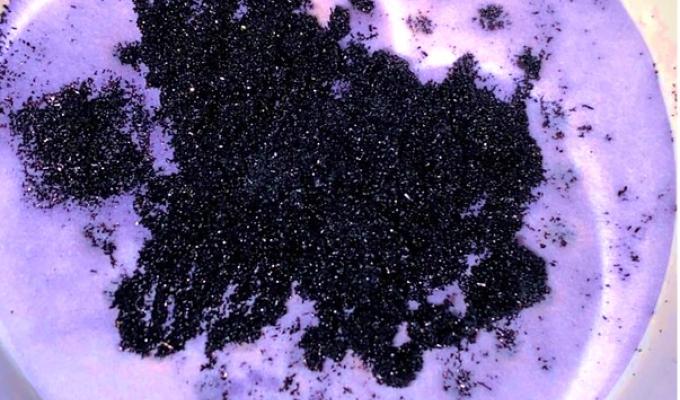
The element vanadium displays a deep purple hue.
Chemistry

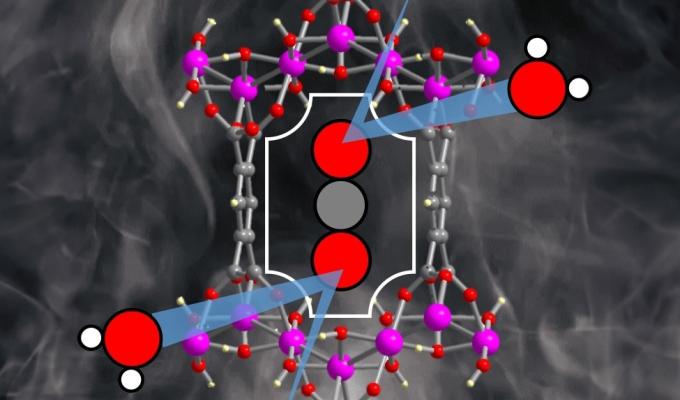
Research led by chemistry professor makes key advance for carbon capture

A chemical element so visually striking it was named for a goddess shows a “Goldilocks” level of reactivity – neither too much nor too little – that makes it a strong candidate as a carbon scrubbing tool.

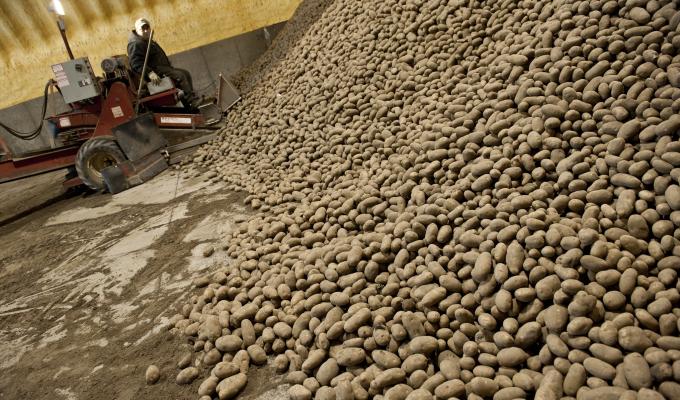
A worker at the head of a conveyor system scoops potatoes from a massive heap.
Chemistry

Researchers receive $2M to look for new ways to prevent organic potatoes from spoiling

Oregon State University researchers have been awarded $2 million from the U.S. Department of Agriculture to develop improved ways of preventing stored potatoes from sprouting, particularly in the organic sector.

A woman with short dark hair poses for a headshot wearing a black shirt and red suit jacket.
Faculty and Staff

Oregon State names new College of Science dean

Eleanor Feingold, a statistical geneticist and associate dean with nearly 20 years of leadership experience at the University of Pittsburgh, has been named dean of Oregon State University’s College of Science. She will start Oct. 31.

A visual representation of a nanomaterial.
Sustainable Energy and Materials

College of Science researchers find a better way to capture carbon from industrial emissions

Researchers in the College of Science have demonstrated the potential of an inexpensive nanomaterial to scrub carbon dioxide from industrial emissions. The findings, published in Cell Reports Physical Science, are important because improved carbon capture methods are key to addressing climate change, said Oregon State's Kyriakos Stylianou, who led the study.

Large windmills stand above a sandy terrain as part of wind energy generation.
OSU Press Releases

College of Science researchers help develop electrolyte enabling high efficiency of safe, sustainable zinc batteries

Scientists led by an Oregon State College of Science researcher have developed a new electrolyte that raises the efficiency of the zinc metal anode in zinc batteries to nearly 100%, a breakthrough on the way to an alternative to lithium-ion batteries for large-scale energy storage.

Three individuals in lab coats look at a vial.
OSU Press Releases

Oregon State develops catalyst that purifies herbicide-tainted water and produces hydrogen

Researchers in the Department of Chemistry have developed a dual-purpose catalyst that purifies herbicide-tainted water while also producing hydrogen.

Gilbert Hall, side entrance
OSU Press Releases

Oregon State receives $3M from U.S. Dept. of Energy to explore a more sustainable battery

The U.S. Department of Energy has awarded $3 million to an Oregon State University College of Science researcher to lead the development of a new, high-energy-density battery that does not rely on rare elements.
Aerial shot of Corvallis, Oregon.
College of Science

Murdock grant to advance innovations in digital chemical discovery and manufacturing

A pivotal Oregon State chemistry project – funded by a $493K grant from the M.J. Murdock Charitable Trust – will create a distinctive collaboration center for academic and industrial researchers that will bring synthetic chemistry into the digital age.

A rainbow peering behind Austin Hall.
Faculty and Staff

Oregon State University leads push to include innovation, entrepreneurship in faculty promotion, tenure criteria

Culminating a project led by chemist Rich Carter, leaders from 67 universities and 13 national organizations have unanimously voted to approve a set of recommendations for recognizing innovation and entrepreneurial achievements among the criteria for higher education faculty promotion and tenure.

pigments of color surrounding color wheel in OSU color palette
Chemistry

Chemist famous for historic discovery of blue pigment receives NSF award to look for new red

Mas Subramanian, distinguished professor of chemistry at Oregon State University, has received a special $200,000 grant from the National Science Foundation to pursue the holy grail of color research: an inorganic red pigment that’s vivid, safe and durable.

A diagram of biobutanol pouring over a fake, plastic chemistry molecule.
Chemistry

Chemist makes key advance toward production of important biofuel

An international research collaboration, led by Kyriakos Stylianou, an assistant professor of chemistry at Oregon State University, has taken an important step toward the commercially viable manufacture of biobutanol, an alcohol whose strong potential as a fuel for gasoline-powered engines could pave the path away from fossil fuels. The researchers are now looking to partner with industry to try to scale up the separation method using the new metal organic framework, says Stylianou, the study’s corresponding author. If it scales well, it could be an important milestone on the road toward non-reliance on fossil fuels.

Kyriakos Stylianou standing in front of Gilbert Hall
Chemistry

New chemistry professor develops a way to curb CO2 emissions

Chemist Kyriakos Stylianou has developed new carbon capture materials to reduce emissions from anthropogenic sources.

factory in front of sunset
Chemistry

Scrubbing carbon dioxide from smokestacks for cleaner industrial emissions

An international team co-led by chemist Kyriakos Stylianou has uncovered a better way to scrub carbon dioxide from smokestack emissions.

Rich Carter talking with student in lab
Chemistry

Chemist awarded NSF grant to study incorporating innovation into promotion and tenure criteria for higher education faculty

The $438K NSF grant has the potential to cause a fundamental shift in how faculty are incentivized and rewarded for their research endeavors.

David Ji talking behind podium
Chemistry

Proton transport ‘highway’ may pave way to better high-power batteries

Chemist Xiulei (David) Ji and his team have found that a chemical mechanism first described more than two centuries ago can revolutionize energy storage.