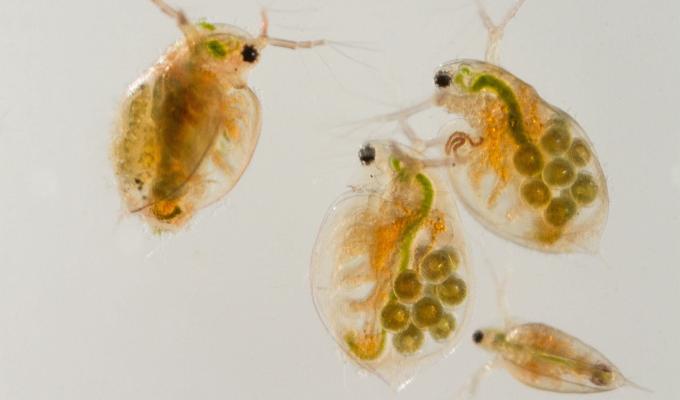
A collaborative team co-led by a College of Science researcher have taken a key step toward closing the knowledge gap with a study that indicates silver nanoparticles’ shape and surface chemistry play key roles in how they affect aquatic ecosystems.
Wei Kong enjoys taking the road less traveled, and she is not timid in making bold decisions to get oriented and reoriented. On May 13, 2024, she will present the 2024 F.A. Gilfillan Memorial Lecture, titled “Which way up: Using field orientation to see the unseen.”
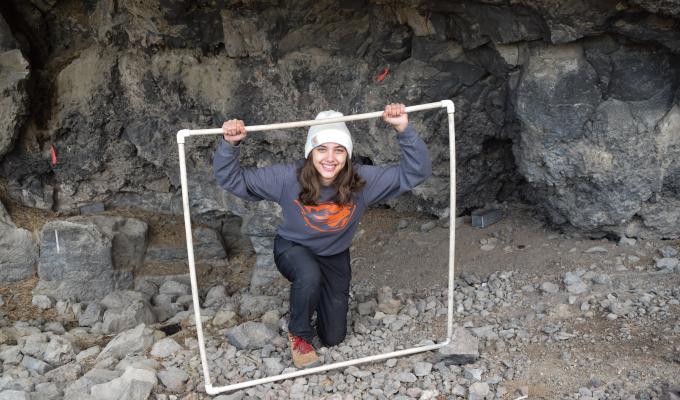
Manon Vezinet spent last summer working with the Cornelius Laboratory, led by Integrative Biology Assistant Professor Jamie Cornelius, studying how increased frequency of unfavorable weather events affects nestling growth. Because of the SURE program, Summer Undergraduate Research Experience, Vezinet was able to experience the once-in-a lifetime opportunity to conduct undergraduate field research and get paid to do it.
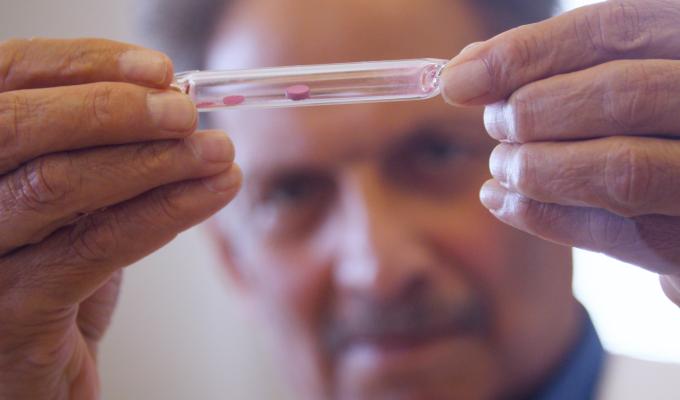
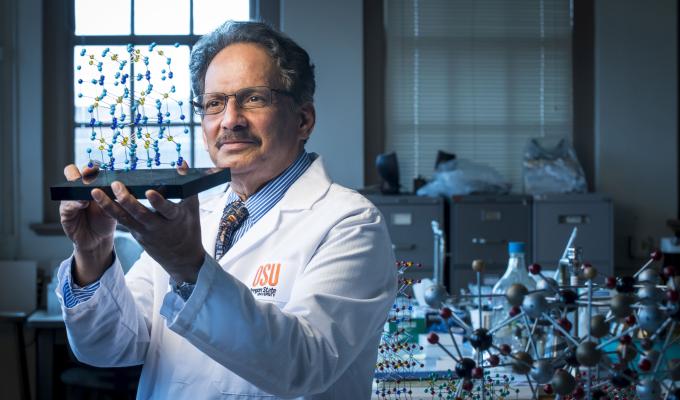
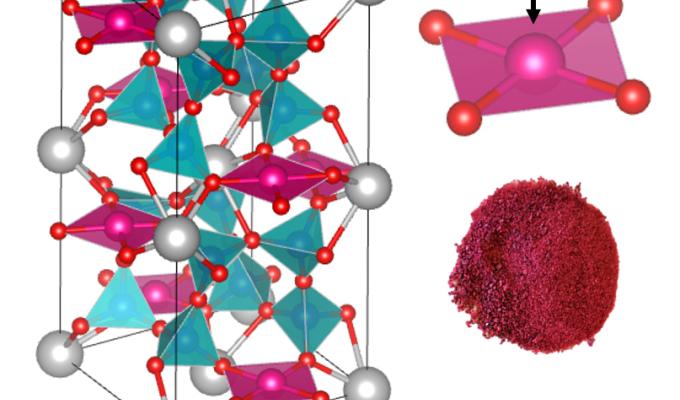
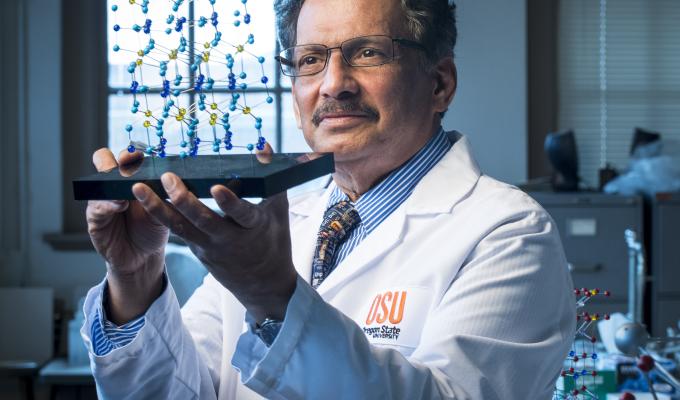
Mas Subramanian made color history in 2009 with a vivid blue pigment and has developed durable, reddish magentas inspired by lunar mineralogy and ancient Egyptian chemistry.
Oregon State University Distinguished Professor and Milton Harris Professor of Materials Science, Mas Subramanian, has been elected a fellow of the Neutron Scattering Society of America for “his insightful application of neutron scattering to provide far-reaching insights into materials chemistry.”
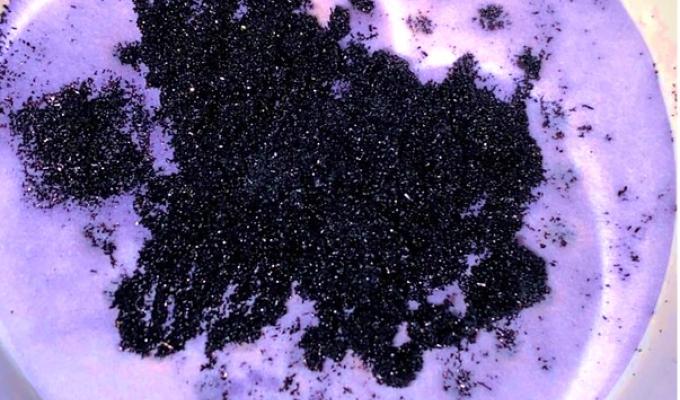
CORVALLIS, Oregon – An Oregon State University researcher who made color history in 2009 with a vivid blue pigment has developed durable, reddish magentas inspired by lunar mineralogy and ancient Egyptian chemistry.
Mas Subramanian, distinguished professor of chemistry, and collaborators at OSU report the findings of the study, funded by the National Science Foundation, in the journal Chemistry of Materials.
Collaborative science has the power to change the world. The 2024 College of Science Research and Innovation Seed (SciRIS) award recipients aim to use that power to develop better treatments for cancer and unlock the mysteries of complex mathematical equations.
Scientists led by an Oregon State University chemistry researcher are closing in on a new tool for tackling the global problem of weedkiller-tainted groundwater.
Kyriakos Stylianou of the OSU College of Science led an international team that identified a material known as a metal-organic framework, or MOF, that showed an ability to completely remove, and also break down, the oft-used herbicide glyphosate.
Carley Beeman’s resume is impressive. Studying Honors chemistry with a focus on advanced biochemistry and a minor in biology, she has been a consistent figure on the Oregon State University Honor Roll. In January, she was announced the chemistry undergraduate of the quarter.
A chemical element so visually striking it was named for a goddess shows a “Goldilocks” level of reactivity – neither too much nor too little – that makes it a strong candidate as a carbon scrubbing tool.
One project keeps chemist Wei Kong awake at night, and it started as an idea nearly two decades ago. Now, after being awarded nearly $2 million for four years by the National Institutes of Health, the goal is to create a groundbreaking new tool with the potential to revolutionize drug development and enhance our understanding of disease mechanisms.
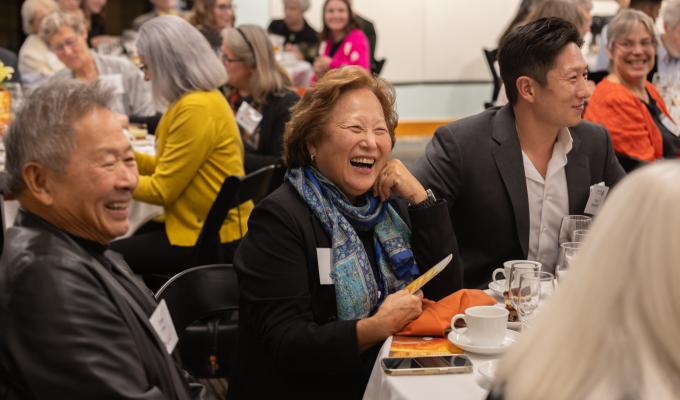
The College of Science community recently gathered to celebrate this year’s Alumni Award recipients. These alumni distinguished themselves through their groundbreaking research, strong leadership and efforts to enhance equity, access and inclusion.
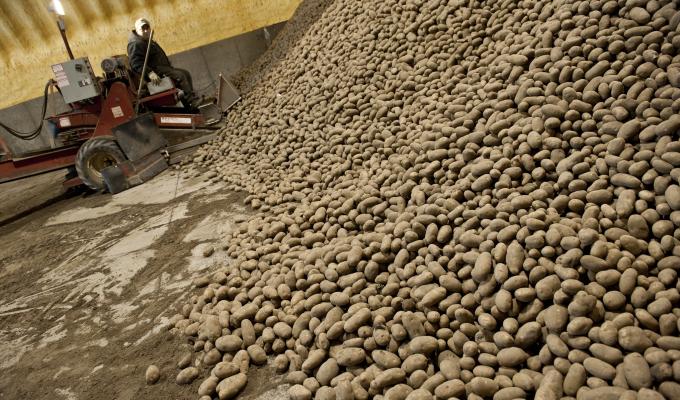
Oregon State University researchers have been awarded $2 million from the U.S. Department of Agriculture to develop improved ways of preventing stored potatoes from sprouting, particularly in the organic sector.
A collaborative team of researchers recently received $2M from the USDA to tackle organic potato sprouting. Kyriakos Stylianou, assistant professor of chemistry, is part of the collaborative group that includes faculty from OSU College of Agricultural Sciences, OSU College of Pharmacy, and the College of Arts and Sciences at The University of Tennessee, Knoxville.
Rather than being swayed by conventional markers of success such as titles and salaries, Parisa Khosropour (B.S., ‘89) advocates for the relentless pursuit of personal excellence. Khosropour is the recipient of the 2023 Distinguished Alumni Achievement Award for her professional accomplishments and mentorship that has brought honor, distinction and visibility to the College of Science.
In 2023, there were an estimated 1.5 million animal species on Earth– only one is truly blue.
The Obrina Olivewing butterfly is the only observed animal that internally produces a blue pigment; the scales of other blue butterflies are complex structures that only refract blue light.
But blue’s rarity is not limited to the organic world.
The Department of Chemistry brought home four awards during the University Day celebration held on September 19, 2023. We’re so proud of our award winners!! Check out the specific awards.
Congratulations to three Department of Chemistry faculty members awarded endowed positions, recognizing their exceptional contributions to solving major challenges in material science currently facing humankind. May Nyman is the Terrence Bradshaw Chemistry Professor; David Ji is the Bert and Emelyn Christensen Professor; and Chong Fang is the Patricia Valian Reser Endowed Faculty Scholar.